Tampilkan postingan dengan label Medically Related. Tampilkan semua postingan

Senin, 22 September 2014

NueMD Launches A Survey Relative to HIPAA Compliance and Readiness

NueMD is conducting a survey of healthcare professionals to gauge their knowledge of HIPAA and help them prepare for an audit.   NueMD is one of the valued sponsors at the Medical Quack so please when you have a moment be sure to take look at the right hand side and see what all have to offer.  Advertisers help keep this blog going.   I also have a link at the bottom of the site with additional information located at the NueMD website.   Nobody ever looks  forward to a HIPAA audit but it’s better to be prepared than to be caught short by all means.  BD 

Click Here To Take the Survey


NueMD is conducting a survey of medical practices, billing companies, and business associates about HIPAA compliance.

In anticipation of the upcoming audits by the Office of Civil Rights, researchers at NueMD have teamed up with The Daniel Brown Law Group and Porter Research to conduct a survey that will help small practices prepare for an audit.

The survey will gauge respondents’ knowledge of HIPAA’s Privacy and Security regulations, understanding of compliance measures, and how electronic devices are used for communication.

Participation is strongly encouraged for care providers, office managers, and office staff of medical practices, as well as those who work for business associates (medical billing companies, software companies, etc) of covered entities.

“Our goal with this survey is to understand how knowledgeable small practices are about HIPAA regulations and what they’re doing to prepare for an audit,” said Caleb Clarke, director of strategic development at NueMD. “The results of the survey will also allow practices to benchmark their progress against their peers and learn what areas may require additional attention.”

All responses are anonymous, and instructions on how to access the results will be provided upon completion of the survey.

http://www.nuemd.com/blog/nuemd-launches-survey-hipaa-compliance-ahead-audits

Emerge.MD to Delivery Video Enhanced Telehealth Using Polycom Real Presence Solution

Polycom is about as top level as you can get with quality video and has been around for a long time.  The companyimage has partnered with Microsoft and may others over the years and now Emerge.MD is using the platform for telehealth.  It can be used to engage the patient, other doctors and so on.   The video below is a statement from a hospital’s success with the program. 

As we all know rural hospitals are really in dire need of telehealth.  Two or more physicians can connect to collaborate.  Also doctors can connect with patients at home, all with a face to face consultation.  BD 

From the website:

“With a web browser and a simple web camera, Emerge.MD can plug patients in to a telehealth care network. Chronic disease monitoring devices are made all the more effective when providers can directly contact a patient when they notice a change in their health status, and follow-up with a face-to-face consultation that adheres to federal privacy laws.”

The video below gives an example of Consult Accelerator and an explanation of how it works.  BD 


PHOENIX, AZ, Sep 22, 2014 (Marketwired via COMTEX) -- Emerge.MD, the only telehealth cloud platform that can connect all the people, processes and technology involved in virtual care with a high degree of security, today announced its products have been demonstrated to interoperate with solutions from Polycom, Inc. PLCM, -2.23% a global leader in video, voice and content collaboration solutions.

Emerge.MD is now integrated with Polycom's RealPresence Platform, which creates a seamless user interface for healthcare organizations to take advantage of video-enhanced workflows when engaging with patients and other healthcare professionals.

http://www.marketwatch.com/story/emergemd-to-deliver-video-enhanced-telehealth-polycom-ready-solution-to-enhance-patient-care-2014-09-22

Minggu, 21 September 2014

Antiquated Ways Hospitals Report Cost to Medicare “Really Distorts” The True Cost of Care–New Model Please..

Here we go again with the same discussion of antiquated models with way too much math and quantitation.  This is a discussion with several hospitals in the Ohio area as the are talking about the future of hospitals and yet still have the noose around their necks with the government on quality reporting and cost.  We all know HHS and CMS are dealing with outdated models and it’s making everyone nuts.  In addition you have health insurers flipping back and forth on contracts, what they cover, what they don’t cover, what changes today, what won’t be there tomorrow and so forth. image People are absolutely hating this complexity that has been created just to go get care.  Look at the link below, some hospitals can’t eve get the ER doctor groups and the hospital itself with the same insurers, so people get screwed again on balance bills. 

In Texas Hospitals Having Issues Employing In-Network Doctors With United Healthcare & Humana-Found One Insurer Still Listing An In-Network “Dead Doctor”…

The article mentions that delivery of care has changed in healthcare and that is true but you’re never going to get away from having hospitals who do have a certain amount of fixed costs that can’t go away either.  Hospitals are anticipating a decrease in the demand for care due to both preventive care and other technologies, perhaps like telehealth that will ease a little on expense.  The one big bogus item we have seen for years though is the projected savings brought by technology and in fact it’s just the opposite as all of it costs money, even if there’s fewer patients being seen at a hospital. 

In the group here is also the Cleveland Clinic and basically they are all saying “we don’t know what’s going to happen” down the road and we don’t know how to measure the quality consistently with all the constant changes.  They agree on one thing, risk is ever so present.  In California , the CMA is telling United Healthcare their Premium Ratings for Doctors are flawed, so there you go again, but as we all know United thinks you can quantitate everything and that is exactly why some of their models and the ones they helped CMS with are failing. 

United “Quantitated” California Doctor Premium Designation Ratings For Consumers, A Few Minor Changes-CMA Still of Opinion Ratings Cause Harm to MDs and Patients With Inaccurate Designations and Flaws…

Here’s yet another example of the United quantitation extremes…how can this push-pull work?  Sure there’s obvious workflow predictabilities that are helpful with monitoring disease and care and but again we have read like below about projected savings they state in a proof of concept that never arrive as models expand beyond efficiencies and dive to deep into a non linear type of projection. 

United Healthcare Wants to Expand Predictive Modeling for Medicare and Medicaid–Billions in Savings Predicted in Report Only As Good as the Day It Is Published

We are still seeing rural hospitals running out of money and closing up.  In the rural area of Virginia here they had to rely on the free clinic from Remote Area Medical to help them as their hospital closed and doctors are struggling in the area. 

Remote Area Medical Sets Up At Lee County Airport in Virginia For a Free Clinic–Rural Community Needing Care Where The Hospital Has Closed and Doctors Struggle…

Again, the “scoring” and reporting from hospitals on non relevant data could certainly ease up a bit and CMS take a hard look at what data they “really” need as this push and pull with outdated models is going to drive everyone nuts.  As you can read below the hospitals can’t predict and they too say the government tracking is not a true indication of their services so a new more flexible model just might be in order.  BD 


Health care providers expect to see fewer patients in the future as care, technology and access to treatment improve.
That means less revenue for hospitals — collectively, the country’s largest employers — which find themselves operating in a dramatically changing industry.

“The United States is going through the biggest change in its society, probably since the New Deal, affecting the biggest industry in the United States and affecting 100% of the population,” said Dr. Delos M. “Toby” Cosgrove, president and CEO of the Cleveland Clinic. “And as we do that, we recognize that we have to change the delivery system to go to value, increasing in quality and making care affordable. And that is driving change in a very, very big industry.”

Boutros said the health care industry is undergoing a metamorphosis as hospitals transition from sick care to a more holistic approach based in preventive care, which is creating as many uncertainties as potential opportunities in the delivery of care.

“This whole change from a sick-care model to a well-care model — as you know Akron General has been talking about this for over 20 years — we spent $110 million on that concept. As a doc, I really don’t understand how people are going to judge our individual practitioners in a value-based world,” Stover said. “That sort of calculus of how it’s all going to work out is something I think we’re all struggling with.”

The reasons costs are so high to patients, and vary so greatly between hospitals, range from the difficulty of assigning a value to services, Stover said, to a hospital’s costs for research and staff education. Meanwhile, Zenty pointed out, the antiquated way costs are reported to Medicare “really distorts” the true cost of care.

And as hospitals see fewer patients, Zenty said, the result is a “decrease in demand and an increase in supply.” That spells bad news for hospitals that receive a large portion of their revenue from the federal government in the form of Medicare and Medicaid, which is expected to be cut next year, Zenty said.

http://www.crainscleveland.com/article/20140919/FREE/140919741/hospital-leaders-come-together

Sabtu, 20 September 2014

House Bill Introduced Would Shorten Meaningful Use to a 90 Period Instead of a Full Year in 2015–A Model In Desperate Need Of Repair or Revisions…

Let’s hope this get some action as the momentum after a successful Meaningful Use Stage One is beginning to fall off.  Some have told me they have just about given up.  Technology is to blame for some of this and frankly the ONC is overwhelmed with complexities due to some of that along with other things happening in the industry.  90 days is a much more reasonable amount of time as hospitals and doctors are very busy today with a lot on their plates.

One hospital in Arkansas received an audit and is asked to return $900,000 based on the fact that they didimage not do a risk assessment for their Meaningful Use Stage one incentives.  There could be more of these.  They were one of the very early adapters and are planning to write an appeal. 

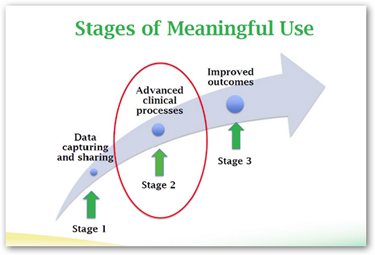
In addition there was the hardship extension which is throwing a bit of confusion out there with again the versions of meaningful use and software used.   It was confusing and I think some didn’t think they needed it when in fact they may have.  In just the simple summaries I write here it’s an effort to keep up on all the rules and regulations.  Hospitals can use the 2011 Edition certified EHR technology or a combination of 2011 and 2014 Edition certified EHR technology for the 2014 reporting period.  Doctors can attest under the 2013 reporting year and use the clinical quality measures from 2013 and will not get a penalty for not moving to meaningful sue Stage 2 during 2014, ok so did you get all that?

Doctors using older medical record systems have until October 1st to report.   For those that miss a 1% reduction in Medicare payments will be assessed.  I have heard a couple of doctors tell me, it’s easier that way to take the 1% hit but for hospitals, that could add up to big money.  Less than 4% are certified for meaningful use two so far and doctors are at 1.3 percent, so sounds like there’s a few handing in the towel here and taking the hit on the payments.  Hospitals on the other hand are working to get this done by the end of the month to start collecting data.

This just grew to be way too complex after Stage One and again it’s another distraction, with big money attached that takes away from caring for patients.  Stage One was a big success and the rules were pretty clear.  Will there be a stage three, time will tell but I think everyone is tired of Stage Two and wants to move forward and get it out of the way.  This is not how things started with the entire program but as it progressed, a real big mess with CMS and technology entering in here just blew the models out of the sockets and they are not working too well right now.   It’s a mess to even sort out at the ONC I would think as there’s a lot to working with models that have variables that change very frequently and as we see here, they can fail very quickly as well.   BD 


Doctors and hospitals hoping the US Department of Health and Human Services will amend its 2015 reporting requirements for Electronic Health Records may get help in the form of legislation.

Rep. Renee Ellmers (R-NC) this week introduced HR 5481, “The Flexibility in Health IT Reporting Act of 2014.” The bill would reverse HHS’s decision to keep a full-year reporting period for its EHR incentive in 2015, replacing it with a 90-day reporting period. Providers have asked for asked for a shorter reporting period because they say the vast majority of doctors and hospitals aren’t prepared to meet Stage 2 Meaningful Use standards by their deadlines.

“The Meaningful Use Program has many important provisions that seek to usher our healthcare providers into the digital age,” Ellmers said, in a press release. “But instead of working with doctors and hospitals, HHS is imposing rigid mandates that will cause unbearable financial burdens on the men and women who provide care to millions of Americans.”

The bill has attracted 3 co-sponsors, including one Democrat, Rep. Jim Matheson of Utah. Many of the organizations joined the letter to Burwell have also come out in support of Ellmers’ bill.

http://www.hcplive.com/physicians-money-digest/practice-management/House-Bill-Would-Shorten-EHR-Reporting-Period

Fewer Blood Transfusions Force American Red Cross To Change It’s Business Model -They Have an App Now That Offers Rewards And Helps With Scheduling..

The Red Cross is even having to look at budgets as the need for as much blood has changed.  Of course there’s still always imagea need but where and how is changing a bit.  People who are injured in crashes and accidents will always be there to need blood.  They are doing more with less and you can read in several areas they have laid off staff.  They have to have plenty of vendors lined up for a blood drive and they need a minimum of 25 people for a blood drive as the cost is around $4000 for each drive. 

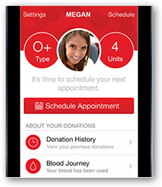
Thus scheduling in advance is a help and now the Red Cross has an app they hope will assist them with that effort.  You can visit the site and see they already have plenty of apps out there. 

Red Cross Mobile Apps


ABC 33/40 - Birmingham News, Weather, Sports

Here’s a video on how the Red Cross “Blood” app works.  I’m not too hot on the selfie end of it but like everything else out there you can earn rewards.  I never thought of donating blood deserving a “reward” but rather just something you did for the “good”.  So now the Red Cross has to market themselves as well to ensure there’s enough blood around.  I can see the app helping with scheduling for sure  with adjusting their manpower and drives if everyone shows up as they schedule.  Again I’ve always been motivated to donate to save lives but this is the world we live in.  BD 


An organization that is always there to help people in need is going through a slight transformation. The American red cross says their need is dropping and it is forcing them to make some changes. people who work in the ''blood-banking'' industry might consider it a bad thing.

UAB is one of the American Red Cross' biggest customers. Most businesses live and die by keeping up with supply and demand. People who work at blood-banking organizations like the American Red Cross say it's not so simple.

Doctors will tell you the medical industry has changed

"We've always had 36 management teams or regions. We are down to 19," added Turner.

Turners tells ABC 33/40 his chapter is doing more with less.

"For example, I am in clinical services, but cover Alabama, Georgia and Puerto Rico instead of just Alabama," added Turner.

http://www.abc3340.com/story/26572249/fewer-blood-tranfusions-force-american-red-cross-to-change-how-it-operates

Medical Records For Sale Found On the Black Market - Evolution Market Where Narcotics And Stolen Financial Data Is Openly Traded and Sold…

This was not from a healthcare company, but rather a life insurance company in Texas.  The fact of the matter here is that there’s enough in there for thieves to make a sale, and another and another.  The story mentions the TOR browser and if you don’t know what it is,image it’s a fork of Firefox that allows form anonymous browsing and actually the only way the Evolution Market can be browsed.  Tor is a legal browser and government agencies, reporters, etc. all use it and it’s just like anything else out there used for the good or the bad. 

What’s interesting here is the terminology the author tells us about as this is something new for me to be reading about.  So now if you hear the word “fullz” you know the street slang here means it’s a load file of all kinds of personal and financial records.  All purchases are done via bitcoin which is kind of bad as it give bitcoin a bit of a bad association.  You can read the article below and see the more you buy, the better the price break too. 

By the time this information was related the government had just begun working on the problem.  The dates on the postings and files seemed to indicate the records had been on sale for around 3 months.  One of the victims now is also complaining about the numerous calls she’s now getting over and over about the theft and saying the notification calls are a bit over done too.   As Dr. Halamka at Harvard recently said, it’s become a war keeping patient medical records secure from hackers. 

It’s Become A war To Keep Patient Medical Records Secure And Out of the Hands of Hackers, Data Selling Epidemic in the US Fuels This Fire…

One of the comments in this article too was very astute in asking “I tend to wonder how many “legitimate” companies are buying these data.”  That comes right back around to the need to license all data sellers in the US.  Let’s revisit the Game Data Dealer here just for the heck of it..they do a good job with dramatics to get your attention.  BD  

Two Data Brokers Get Fined by the FTC For Non Compliance, One Gets Most All Of The Million Dollar Fine Reduced as They Could Not Afford To Pay By the Court, But If You Are A Consumer With Medical Bills You Go To Bankruptcy Court..


How much are your medical records worth in the cybercrime underground? This week, KrebsOnSecurity discovered medical records being sold in bulk for as little as $6.40 apiece. The digital documents, several of which were obtained by sources working with this publication, were apparently stolen from a Texas-based life insurance company that now says it is working with federal authorities on an investigation into a possible data breach.

Purloined medical records are among the many illicit goods for sale on the Evolution Market, a black market bazaar that traffics mostly in narcotics and fraud-related goods — including plenty of stolen financial data. Evolution cannot be reached from the regularimage Internet. Rather, visitors can only browse the site using Tor, software that helps users disguise their identity by bouncing their traffic between different servers, and by encrypting that traffic at every hop along the way.

Last week, a reader alerted this author to a merchant on Evolution Market nicknamed “ImperialRussia” who was advertising medical records for sale. ImperialRussia was hawking his goods as “fullz” — street slang for a package of all the personal and financial records that thieves would need to fraudulently open up new lines of credit in a person’s name.

Each document for sale by this seller includes the would-be identity theft victim’s name, their medical history, address, phone and driver license number, Social Security number, date of birth, bank name, routing number and checking/savings account number. Customers can purchase the records using the digital currency Bitcoin.

A set of five fullz retails for $40 ($8 per record). Buy 20 fullz and the price drops to $7 per record. Purchase 50 or more fullz, and the per record cost falls to just $6.40 — roughly the price of a value meal at a fast food restaurant. Incidentally, even at $8 per record, that’s cheaper than the price most stolen credit cards fetch on the underground markets.

“Live and Exclusive database of US FULLZ from an insurance company, particularly from NorthWestern region of U.S.,” ImperialRussia’s ad on Evolution enthuses. The pitch continues:

“Most of the fullz come with EXTRA FREEBIES inside as additional policyholders. All of the information is accurate and confirmed. Clients are from an insurance company database with GOOD to EXCELLENT credit score! I, myself was able to apply for credit cards valued from $2,000 – $10,000 with my fullz. Info can be used to apply for loans, credit cards, lines of credit, bank withdrawal, assume identity, account takeover.”

Sure enough, the source who alerted me to this listing had obtained numerous fullz from this seller. All of them contained the personal and financial information on people in the Northwest United States (mostly in Washington state) who’d applied for life insurance through American Income Life, an insurance firm based in Waco, Texas.

American Income Life referred all calls to the company’s parent firm — Torchmark Corp., an insurance holding company in McKinney, Texas. This publication shared with Torchmark the records obtained from Imperial Russia. In response, Michael Majors, vice president of investor relations at Torchmark, said that the FBI and Secret Service were assisting the company in an ongoing investigation, and that Torchmark expected to begin the process of notifying affected consumers this week.

More than 1.8 million people were victims of medical ID theft in 2013, according to a report from the Ponemon Institute, an independent research group. I suspect that many of these folks had their medical records stolen and used to open new lines of credit in their names, or to conduct tax refund fraud with the Internal Revenue Service (IRS).

http://krebsonsecurity.com/2014/09/medical-records-for-sale-in-underground-stolen-from-texas-life-insurance-firm/


Jumat, 19 September 2014

Erlanger Health System in Tennessee Looking to Cut Ties With United Healthcare–Contract Expires at the End of the Month

As you can read below there’s a lawsuit that’s pending regarding payments filed by the hospital a few years ago.  Basically the hospital is saying they are not paying adequately.  All physicians would be out of network and again would this be a double whammy for the Medicareimage Advantage patients, some of which have already had their primary doctors fired.  If you read the link below you can see where United is working to match patients up with new doctors but the algorithms are doing funny things and giving patients OBGYNs and Neurosurgeons as their new primary care MDs. 

Patients In Tennessee Speak Out About United Healthcare Firing Their Doctors As the Effort Continues To Reduce Their Own In House Overhead With Managing Fewer Doctor NPI Accounts, Contracts and Billing…More Killer Algorithms At Work Hurting Seniors

A couple more weeks and we shall see if they walk away from the Medicaid contract and the rest that also follows.  BD 


The Chattanooga region’s largest hospital system may soon be out of network for thousands of patients with UnitedHealthcare insurance if a bitter dispute with Erlanger Health System over payment rates is not resolved by the end of the month.

Erlanger officials say the current dispute, which centers on a contract with United’s Medicaid product, is the final straw in a long-strained relationship between the public hospital and the for-profit insurer.

If a deal is not reached, children and pregnant mothers who have United insurance through TennCareimage will be out of network on Oct. 1. Erlanger has the area’s only children’s hospital.

But Erlanger officials say the partnership has never been smooth.

“No other insurer has been this difficult to work with,” Erlanger CEO Kevin Spiegel said.

For patients who have United insurance through their employers or through Medicare Advantage, Erlanger would be out of network as of Jan. 1, 2015. That would include all of Erlanger’s affiliated physician groups and community health centers.

United has been paying “pennies on the dollar” of what should be standard for its TennCare patients, Erlanger argues, and repeatedly denies the hospital’s claims. The hospital sued United over this issue five years ago, and the litigation is ongoing.

Hospital officials say they made an offer that was about 75 percent of the highest possible reimbursement. United rejected it.

Erlanger is the third-largest TennCare provider in the state, and takes the highest percent of TennCare patients in the region.

“They are willing to walk away from the entire Medicaid population in East Tennessee,” Spiegel said.

United’s gross profit from TennCare was nearly $422 million in 2013 and $490 million in 2012, according to an equities analysis by CitiBank.

http://www.timesfreepress.com/news/2014/sep/18/erlanger-looking-cut-ties-united-healthcare/?breakingnews

US CIO Steven VanRoekel Stepping Down–New Job Is CIO of United States Agency for International Development

VanRoekel worked for the agency before being appointed as US CIO.  We’re losing a good engineer with talent but he’s going to a great job as well where he can make a difference .  His work at the government was not really in the focus all the time but that doesn’imaget mean it wasn’t important as it was.  He worked in the background helping government agencies with big engineering and cloud solutions, and that’s big.
His background included several years at Microsoft.  So this is our loss and the gain for the USAID.  It was only a few weeks ago we lost Todd Park, the US CTO. 

Todd Park US CTO Leaving His Post-Anyone Noticing a Pattern Here With Technologists Jumping Ship One After Another?

I have to say I can almost feel some frustrations with these type of folks as they have to deal with others in government who have weird perceptions and kind of really guide them into the right areas at times and at some point it does get laboring.  On a much smaller scale I know exactly what that is and I see it on social networks too.  You don’t always get the perceptions in the news as it really is and part of that is due to the fact that some of what they are reporting on is complex as well and then there’s the political skew that enters as well.  Sometimes you get a story or a study or data news that is really is not any kind of news at all.

In part of his new job VanRoekel be working to bring his technology expertise to help battle the government’s Ebola control program.  BD


White House chief information officer Steven VanRoekel is stepping down from that post to advise the government’s response to Ebola, his office confirmed on Friday. Lisa Schlosser, current deputy administrator for the Office of E-Government and Information Technology, will act as interim CIO.

VanRoekel, appointed federal CIO by President Obama in 2011, is returning to the United States Agency for International Development to serve as its CIO. Prior to his White House appointment, VanRoekel led digital communications programs at USAID; he was also previously managing director at the Federal Communications Commission.

As federal CIO, VanRoekel recently oversaw the launch of the U.S. Digital Service — a newly formed group whose mission is to help government agencies improve IT projects. Administrator Mikey Dickerson will continue to oversee the U.S. Digital Service, according to the Office of Management and Budget.

“When taking the job of U.S. Chief Information Officer, my goal was to help move Federal IT forward into the 21st Century and to bring technology and innovation to bear to improve IT effectiveness and efficiency," VanRoekel said in a statement.

Before he joined the public sector, VanRoekel worked at Microsoft between 1994 and 2009, most recently as a senior director.

http://www.washingtonpost.com/business/on-it/cio-vanroekel-steps-down-returns-to-usaid-to-work-on-ebola-response/2014/09/19/cc34a7ba-4017-11e4-b03f-de718edeb92f_story.html

CMS/ONC Does Some Nice Work and Updates for the Blue Button Campaign, All That’s Needed Now Is People Helping People…

There’s a new toolkit in which the intended audience is to assist with both information and marketing tools various groups in healthcare, from hospitals, drug stores and more.  For those entities wanting promotional material and information this makes a good showing. image I have always said the Blue Button is like the best kept secret for seniors.  It’s better known with the VA as there’s a varied age group there and more have advanced internet and computer skills.  They use those skills in the military; however with seniors it’s a little different.  I’ve done a few presentations for seniors and hands down each time, about 99% have no clue what the Blue Button is. 
Blue Button Tool Kit - Support for Organizations to Promote the Blue Button

Point in case is that seniors are not always going to jump to the internet and find all the resources they may need and want.  Seniors need someone in person to get the drive going and once they see it, there’s immediate interest to learn how to download their records and learn more about what kind of information they can receive with their Medicare records.

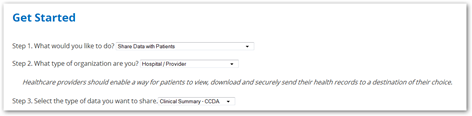
There’s a nice drop down menu to make your selections to put you into the area of marketing and additional information that would be applicable to the appropriate organization. 

Again, all you need is people so this is nice start with materials needed to help humans help other humans.  Website looks nice as there’s been quite a bit of work done here. 

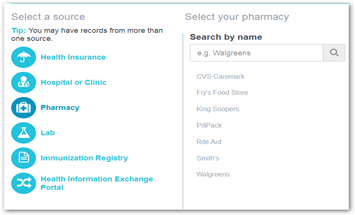
In addition there’s another website and this is to help both consumers and any healthcare entity.  This is called the Blue Button Connector and the intended crowd here is pretty much anyone.  It goes imagethrough with drop down menus where you can get an idea of what insurers, labs, pharmacies  and a few others have available for you in the way of being able to get, view or download your records.  You can see on each filter what’s available and just looking at a few of the menu items, there’s quite a few that could use some additional Blue Button Promotions on their websites I think. 

Blue Button Connector Web Site

In addition there are various apps listed that have been created that make it easier to use the Blue Button that are either free or available at a low cost. 

Blue Button Mobile and Other Apps

If you are a developer there’s additional information at a couple different pages, one is called the Blue Button Plus page.  If you are not a developer you can skip these link as this is where it gets technical:) 

Blue Button Plus Site for Developers

In addition the Blue Button Connector has resources for developers.

Blue Button Connector Developer Resources

I took a short minute to go to Github to look at a few code samples and I didn’t spent a lot of time there but did look at some of the app code loaded and it’s a great start for the libraries. 

Again, all we need is people here for the seniors to give them a hand.  It’s interesting when I have given presentations, you may have all levels of technology in the crowd but again 99% when I ask if they have ever heard of the Blue Button say “what’s that”.  So there’s enough said on the extra human outreach that is needed for seniors, other than directing them to buy a dummied down marketing AARP tablet.  Seniors want to use the same computers and tablets we do and I guess time will tell if it becomes a tool or not.  BD 

Kamis, 18 September 2014

FDA Approves Faster Acting ED Drug–More Need For Speed?

Well I guess 15 minutes extra can be a long wait so here’s a new approval that cuts the wait time down to 15 minutes insteadimage of 30 minutes.  BD


An erectile dysfunction drug that reduces by half the time patients need to take the pill before sexual activity has won approval for marketing in the United States.

The drug, Stendra, is the first erectile dysfunction drug approved by the U.S. Food and Drug Administration that can be taken about 15 minutes prior to sexual activity.

Stendra was first approved in 2012 when it was indicated for use 30 minutes before sexual activity.

http://www.foxnews.com/health/2014/09/18/faster-acting-erectile-dysfunction-drug-gets-fda-approval/

FDA Approves New Drug For Treating Diabetes 2 As A Stand Alone Or Combined With Other Therapies

Trulicity is manufactured by Indianapolis-based Eli Lilly and Company and is not for treatment of diabetes one. image The drug is a weekly injection and part of a new class of drugs that induce the pancreas to create extra insulin after meals.

There will be  a boxed warning that rats tested with the drug had cases of thyroid cancer and post studies will be required as listed below.  BD 


The U.S. Food and Drug Administration today approved Trulicity (dulaglutide), a once-weekly subcutaneous injection to improve glycemic control (blood sugar levels), along with diet and exercise, in adults with type 2 diabetes.

Type 2 diabetes affects about 26 million people and accounts for more than 90 percent of diabetes cases diagnosed in the United States. Over time, high blood sugar levels can increase the risk for serious complications, including heart disease, blindness, and nerve and kidney damage.

"Type 2 diabetes is a serious chronic condition that causes blood glucose levels to rise higher than normal,” said Mary Parks, M.D., deputy director of the Office of Drug Evaluation II in the FDA’s Center for Drug Evaluation and Research. “Trulicity is a new treatment option, which can be used alone or added to existing treatment regimens to control blood sugar levels in the overall management of type 2 diabetes.”

Trulicity has been studied as a stand-alone therapy and in combination with other type 2 diabetes therapies, including metformin, sulfonylurea, thiazolidinedione, and prandial insulin. Trulicity should not be used to treat people with type 1 diabetes; those who have increased ketones in their blood or urine (diabetic ketoacidosis); those with severe stomach or intestinal problems; or as first-line therapy for patients who cannot be managed with diet and exercise.

The FDA is requiring the following post-marketing studies for Trulicity:

  • a clinical trial to evaluate dosing, efficacy, and safety in pediatric patients; 
  • a study to assess potential effects on sexual maturation, reproduction, and CNS development and function in immature rats;
  • a medullary thyroid carcinoma (MTC) case registry of at least 15 years duration to identify any increase in MTC incidence related to Trulicity; 
  • a clinical trial comparing Trulicity with insulin glargine on glycemic control in patients with type 2 diabetes and moderate or severe renal impairment; and
  • a cardiovascular outcomes trial to evaluate the cardiovascular risk of Trulicity in patients with high baseline risk of cardiovascular disease.

The FDA approved Trulicity with a Risk Evaluation and Mitigation Strategy (REMS), which consists of a communication plan to inform health care professionals about the serious risks associated with Trulicity.

http://www.fda.gov/NewsEvents/Newsroom/PressAnnouncements/ucm415180.htm

Rabu, 17 September 2014

Hospital in Florida Reports Third Data Breach In Two Years…

This appears from what I have read to all be internal theft problems, in other words not hackers, insiders stealing records.image  This takes me back to the game called “Data Dealer” where fictitious nurse Mildred wants to earn some extra cash but in this case it’s real. 

Valesco a staffing agency might be the source here of the problems with screening?  It’s hard to say but they sent the letter to patients so it kind of looks that way. 

These are good sized breaches as well and ones to take seriously.  The last breaches were back to back. 

The report was made to HHS and the data was used to file tax returns for some of the patients.  The Feds are now involved with investigating the case.  BD 

video platformvideo managementvideo solutionsvideo player


For the third time in two years, U.S. Health and Human Services records show Aventura Hospital and Medical Center has reported a data breach.

What is more, the start date the latest data breach is exactly one day after a former data breach ended that impacted 2,560 individuals.

There was also a report impacting 948 people from Oct. 1, 2012 to Dec. 31, 2012.

A company called Valesco Ventures sent a letter to Aventura Hospital and Medical Center patients about the most recent case of identify theft.

Valesco "provides hospital staffing and ancillary services" according to the letter dated Sept. 9, 2014.

According to Valesco manager Terry Meadows, M.D., the company was told last May "an employee may have improperly accessed the personal identifying information of a number of patients of Aventura Hospital."

http://www.local10.com/news/aventura-hospital-medical-center-reports-data-breach/28082920

FDA Approves Oral Drug To Combat Constipation For Patients On Long Term Opioid Painkillers–Personalized Medicine..

Ok with the title a little sarcasm but I really didn’t know that this was a specific type of constipation and that a special drug was needed for relief?  As you read the article the design of the drug is to ensure you don’t lose any painkilling ability of the Opioid drug.  I didn’t evenimage know that was a side effect of taking a drug to relieve constipation if one were taking an Opioid.  Guess the ones off the shelf are not as good anymore? 

The drug is due to release the first quarter of 2015 and was first approved to treat severely ill patients receiving palliative care where the off the shelf remedies did not provide relief.  The drug is not for patients being  treated for cancer.  BD 


(Reuters) - The U.S. Food and Drug Administration approved an oral therapy to treat opioid-induced constipation developed by Nectar Therapeutics and AstraZeneca Plc .

The decision opens the door for peripherally acting mu opioid receptor antagonists, which have been linked with cardiovascular risk in the past.

This class of opioid-induced constipation (OIC) drugs are designed to fight the effects of opioid painkillers on the gut without compromising centrally mediated pain relief.

The agency on Tuesday asked the developers to conduct a postmarketing study to further evaluate the potential risk of heart-related side-effects.

"If you look at the way they structured the deal with Nektar, clearly they think this is a multi-billion dollar drug," he said.

http://www.reuters.com/article/2014/09/16/astrazeneca-fda-idUSL3N0RG4TT20140916

Selasa, 16 September 2014

Anthem Blue Cross Creates Yet One More New Insurance Plan–Vivity, Partnering With 7 Major Hospitals in Los Angeles

Well did they did one thing right and got CalPERS on board so that a lot of business to start out with effective January 1, 2015.  CalPERS was just in the news with getting rid of all their hedge fund investments to the tune of $4 billion as well.   MemorialCare andimage Cedars already have a few things going together like this Venture Capital fund created a few months ago. 

Cedars-Sinai and MemorialCare Health System Create New Venture Capital Company-Sounds Like A Little Influence of From The United Healthcare Manifesto Is Moving Up to LA, Maybe More Cash For Code for Developers?

The whole idea here is to take on Kaiser as they have a lot of business and are self contained with both insurance and medical care in one.  It will be called the Vivity Health Plan and will be about 10 percent less in cost than a standard Anthem Blue Cross HMO plan.  Nobody knows if this will save any money or not and right now in that area it’s just a proof of concept.  There will be around  6000 doctors and 14 hospitals all together in the group.  Already with UCLA and Cedars they both invested in a rehab hospital so they can move you over to the old Century City Hospital to get you out the door faster.

Century City Hospital In West LA To Get a New Life, A Rehab Hospital Investment For UCLA and Cedar Sinai Hospitals

This probably explains the madness behind the new big data base Blue Cross is paying $80 million to start as well and I have no clue on how it will work and have my doubts on that one as well unless now these hospitals decide to kick in for an HIE type of operation.

Anthem Blue Cross & Blue Shield of California Going to Create “Yet Another Big Data Base of Patient Medical Records” - Be Ready for Premiums to Go Up As Health IT Eats Up the Healthcare System

Also I would imagine the $350 a month kick back to the Oncologists will play in here too with all the doctorsimage seeing cancer patients where they agree to use the Blue Cross methods of recommended treatment.  Anthem Blue Cross is a licensed reseller of IBM Watson and a couple years ago pretty much foot the bill for the use at Cedars to get it started.

WellPoint Begins New Oncology Program For Providers Offering Doctors $350 Monthly Payment For Each Patient Treated Using Insurers Recommendations - Is This A Kickback Offer?

I can understand what they are doing here and at least they are being honest and saying “this is just a stab in the dark” venture.  Obviously having CalPERS as base is big help by all means if a great number of their insured sign up.  This will get interesting as there will be one more plan to check eligibility with.  This gets kind of interesting as MemorialCare in more ways than one has some pretty strong ties to United Healthcare too.  MemorialCare owns the management company that runs the Cedars Doctor’s IPA group, Nautilus, which also runs Greater Newport Physicians in the OC.   BD   


Taking aim at HMO giant Kaiser Permanente, insurer Anthem Blue Cross is joining forces with several big-name hospitals and their doctors to create an unusual health plan option for employers in Southern California.

The joint venture being announced Wednesday brings together seven rival hospital groups in Los Angeles and Orange counties, including well-known institutions Cedars-Sinai Medical Center and the UCLA Health System. The deal reflects the pressure insurers and hospitals alike are facing to hold down healthcare costs for employers and their workers.

The California Public Employees' Retirement System, the giant pension fund and the nation's second-largest healthcare buyer, has already signed on as the first major customer in the Southland starting Jan. 1.

The new Vivity health plan also includes MemorialCare Health System, Good Samaritan Hospital, Huntington Memorial Hospital, Torrance Memorial Medical Center and PIH Health. In addition to their hospitals, this Anthem HMO includes all of their affiliated physicians offices, surgery centers, clinics and other outpatient facilities.

"We will have a price point similar to Kaiser or better," said Barry Arbuckle, chief executive of MemorialCare, which runs Long Beach Memorial and five other area hospitals. "This is the next major step for managed care”.

The seven hospital partners and Anthem, the state's largest for-profit health insurer and a unit of WellPoint Inc., will share in any profits and losses from this joint venture.

http://www.latimes.com/business/la-fi-anthem-hospitals-deal-20140917-story.html#page=1

Two Kaiser Permanente Executives, CIO And VP of Digital Health Jump Ship and Go For the Money at AIG

I guess you could say that CIO Philip Fasano brought Epic to Kaiser as their medical recordsimage programs was one of his projects.  He was a banker before Kaiser and worked at Capitol One and JP Morgan in IT. 

Madhu Nutakki, KP’s VP of digital health is also leaving and going to AIG.  The whole world knows who AIG is as all you have to do is think about subprime loans and the crash. 

This makes 2 key folks in the Kaiser IT business leaving.  BD 


American International Group Inc. Monday named Philip Fasano chief information officer and executive vice president. He begins in October and will report to CEO Peter D. Hancock, who took the helm earlier this month.

Mr. Fasano’s responsibilities will include guiding AIG’s Big Data strategy, powered by the property-casualty, life and retirement insurer’s vast amounts of customer data. He replaces Robert Dickie, who left the company for AIG rival Zurich Insurance Group Ltd. in February.

Mr. Fasano joins the insurance giant from Kaiser Permanente, where, as EVP and CIO since 2007, he led a number of data projects, including the $4 billion construction of Kaiser’s electronic health records system for 9 million patients. Kaiser analyzes data captured from the EHR system to improve patient outcomes and help the health-care provider monitor patient activities, such as failure to refill prescriptions.

http://blogs.wsj.com/cio/2014/09/15/aig-finds-new-cio-philip-fasano-at-kaiser-permanente/

Senin, 15 September 2014

In Texas Hospitals Having Issues Employing In-Network Doctors With United Healthcare & Humana-Found One Insurer Still Listing An In-Network “Dead Doctor”…

Sometimes the ER doctors and hospitals have different contracts and this is beginning to be an issue in Texas as it ends up with patients getting sometimes huge unexpected bills.  I had to laugh when I saw a “dead” doctor listed at I thought Healthgrades and Vitals were the kings of dead doctor listings but look like insurers leave in them in network for some amount of time.

Healthgrades Partners With Athena Health To Provide Easier Access to Book Appointments, Like Maybe Doing Better With Sorting Out Some of the “Dead doctors” Seeing Patients in the After Life?

At some point this has to change as consumers can’t continue to work with this and keep shifting and know when every tiny change is made, it’s too much anymore based on contracts that change at the drop of a a business intelligence algorithm.  That’s what’s going on.  At United we have the “secret scoring” where they are being fired and given no reason why, so you know it’s an algorithm making that decision.

“The Secret Scoring of America’s Physicians” - Algorithmic Math Models For Insurance Network Contractual Exclusions, Relating to MDs Who See Medicare Advantage Patients..

Oh and they all cite the patients who can’t the right information, even though websites are not fully updated an so on, it’s always the patients fault.  Here in California the CMA is also up in arms with United, heck they are using as they stated a model to grade doctors that’s been in use since 2005.  I found it funny they said that as models don’t last that long and continue to work for that many years in healthcare or finance for that matter, ask a hedge fund quant.

United “Quantitated” California Doctor Premium Designation Ratings For Consumers, A Few Minor Changes-CMA Still of Opinion Ratings Cause Harm to MDs and Patients With Inaccurate Designations and Flaws…

Here’s a link from a short while back where United is shuffling patients around and firing doctors, trying to match patients up with other primary doctors but their algorithms are not doing too well as Medicare Advantage folks found themselves getting letters referring them to an OBGN and a neurosurgeon as their new family practice doctors. 

Patients In Tennessee Speak Out About United Healthcare Firing Their Doctors As the Effort Continues To Reduce Their Own In House Overhead With Managing Fewer Doctor NPI Accounts, Contracts and Billing…More Killer Algorithms At Work Hurting Seniors

Patients are not only over whelmed in Texas but all over the US and again this has to stop with optimization of networks and the AAFP recently wrote to insurers about this topic as well.  Doctors and patients are people and they can’t jump and run when algorithm comes calling.  This is exactly what’s happening and the insurers business models themselves are failing if they can’t do better data matches and bring the human elements into the picture.  This is not the patients fault as insurers and many have said this besides me, thrive on complexities as it means profit so there’s no incentive for them to really stop it either. 

AAFP Says We’re Not Going To Take It Anymore With Optimization of Provider Networks - Specifically United Healthcare’s Doctor Dumping That Disrupts Continuity of Care

Trey Berndt, an associate state director for advocacy with AARP, told lawmakers emergency-room visits present special challenges for price transparency because hospitals sometimes contract with emergency-room doctors who do not participate in the same insurance plans as the hospital. A website listing which hospitals have in-network doctors in their emergency rooms is not going to help a patient undergoing a stroke, he said.

“The transparency stuff does not work in an emergency situation. You don't have time," said Berndt, whose organization advocates for people of retirement age.

The report found that in emergency rooms at roughly half of in-network hospitals for United Healthcare and Humana, two of the state’s three largest insurers, there were no in-network physicians.

Lawmakers also considered the transparency issue outside of emergency rooms. State Sen. Leticia Van de Putte, D-San Antonio, called on insurers to regularly update their lists of in-network doctors. She cited an example of a dead doctor who was still listed on one insurer's network. She also said the state's current transparency requirements — including a rule that insurers give written notice to patients who could face higher costs from out-of-network providers — are insufficient.

Charles Bailey, representing the Texas Hospital Association, said consumers were often overwhelmed by how complicated the health care system can be, but that “hospitals are doing their best to help educate” them. He acknowledged it was a problem that hospitals are “not always able” to employ in-network physicians.

http://www.texastribune.org/2014/09/15/lawmakers-take-transparency-health-care-costs/

Humana Loses Major Contract in Wisconsin to the “Too Big To Fail Insurer, United”

Humana is much smaller in size and 75% of their entire business is Medicare Advantage and I am reading this to be a contract that is not imageMedicare Advantage in the fact that this contract covered 5,000 employees of the Business Health Group.  I might make a guess and say that price had something to do with this as just common sense Humana might not be able to compete here.  I say “too big to fail here” as that’s what’s happening with one insurer outsizing the rest in the country and having 15 pages of subsidiary companies at the SEC listed, although you might not see that today as many have been now absorbed by the Optum division, but they are still there along with the huge number of government contracts United has by comparison to the other major insurers in the US.  United makes 1/3 of their profits from software, consulting and things outside selling policies today, and that’s the other 2/3rd of the business.


In a major loss to Humana’s Wisconsin business and a possible blow to the Business Health Care Group, Northwestern Mutual has changed its employee health plan from Humana to UnitedHealthcare.

A spokeswoman for Northwestern Mutual, which has 5,000 employees locally, said Monday the change is effective with the start of the company’s open-enrollment process this fall.

“Northwestern Mutual has chosen UnitedHealthcare to administer our medical plans as we desire to continue to guide our participants to higher quality care and better outcomes at a reasonable cost,” Northwestern Mutual spokeswoman Betsy Hoylman said. “UHC provides many easy-to-use tools and resources to help our employees make informed choices based on having more background about health care providers, including information about outcomes and cost of services.”

http://www.bizjournals.com/milwaukee/news/2014/09/15/northwestern-mutual-switches-to-unitedhealthcare.html?page=all

Advocate Health Care and NorthShore Hospital Systems To Merge In Illinois–Creates 11th Larges Non Profit System In the Country

Here we go again as there’s a lot of news of late with mergers and acquisitions in the news today.   If you read theimage news of late this was the worst year that non profit hospitals have had in years so we might see more of these.  I read around the web about folks talking about the different medical records systems and actually they could all use a product and integrate their records today from Zoeticx.  This is a big deal when mergers happen today as medical record integration is on everyone’s mind.  At any rate, I read where there are 3 different systems, Epic, Cerner and AllScripts involved and one platform could unite them all and the Allscripts hospital can buy it right off the Allscripts website to get started. 

Zoeticx–EHR Agnostic Clarity Healthcare Platform, An HIE Requiring No Data Warehousing For Interoperability, Answers The Call for Less Disruption With Actionable Medical Information Flow

One does begin to wonder what’s going to happen when all the mergers and acquisitions are done.  In the rural parts of the US we have had so many of those close as they have run out of money so all hospitals are not created equal today by any means.  BD 


Two of Chicago's largest hospital systems on Thursday approved plans to combine, creating a 16-hospital, $6.8 billion system that promises to change the competitive landscape of health care in the Chicago region.

Advocate Health Care, the state's largest hospital system, and NorthShore University HealthSystem, the dominant hospital chain in the North Shore suburbs, said Thursday they will merge to create Advocate NorthShore Health Partners in a deal that's expected to close in early 2015.

The blockbuster deal is the largest hospital merger in Illinois in recent years, a trend set in motion by the federal Affordable Care Act and fueled in part by declining hospital patient volume and tighter finances.

It will create the 11th-largest nonprofit health system in the country and by the far the largest in Illinois, with more than 45,000 employees and 4,438 hospital beds.

http://www.chicagotribune.com/business/ct-advocate-north-shore-0912-biz-20140912-story.html#page=1

Minggu, 14 September 2014

Stephen Hawking and Intel Develop The Intel IoT (Internet of Things) Connected Wheelchair–Video

Now this is a cool video and something very neat a nice break away from Intel’s wearables campaign.  The wheelchair imagealso does biometrical information collection from the user, as well as mechanical information from the machine.  The team also built an application that allows wheelchair users to map and rate the accessibility of locations, and that’s would really be helpful for the wheelchair user to know ahead of time whether or not they would have access or if the wheelchair can handle it.

They could not have chosen anyone better than Stephen Hawking, the world famous physicist and this has to improve his quality of life a bit even though he’s pretty limited.   He cannot walk, or speak and move independently. 

He suffers from ALS and was diagnosed at a young age and was told he didn’t have many years to live but he’s still here with us many years later.  He’s been using speech technology to communicate for years.  There’s a small sensor on his glasses that helps him with his voice technology with his cheek muscles.  It’s just amazing he just keeps going.  BD 


“The Internet of Things can help change lives,” Krzanich said as he introduced a powerful video starring Stephen Hawking speaking from an IoT-connected wheelchair designed at Intel.  Hawking went on to describe how the Intel technology-based machine can increase mobility.

Through the Intel Collaborators program, a team of Intel engineering interns designed a custom platform that can transform standard wheelchairs into data-driven, connected machines. Using the Intel Galileo board and Intel Gateway Solutions for IoT, the team created a wheelchair that enables the collection of biometrical information from the user, as well as mechanical information from the machine, that can then be analyzed by stakeholders in the industry. The team also built an application that allows wheelchair users to map and rate the accessibility of locations, further enhancing the user experience.

http://blogs.intel.com/iot/2014/09/intel-iot-wheelchair-featured-idf14-opening-keynote/

Brooklyn Hospital Center Drops New York Presbyterian System to Align With Mount Sinai

Ok time to switch places again and I don’t know of the impact this will have on patients with doctor affiliations but assume there could be some.  Brooklyn Hospital Center is now a clinical and academic affiliate of Mount Sinai and its school of medicineimage (The Icahn School of Medicine at Mount Sinai).  This is good for Mount Sinai with a bigger reach into Brooklyn.  As I read there’s nothing financial here but rather just an affiliation beyond one current walk in urgent care center.  As the article states, there’s more of this type of activity taking place in New York.   Since the closure of Long Island College Hospital in downtown Brooklyn in 2013, the need for hospital care has rolled over to the remaining hospitals.  BD

One More New York Hospital Set to Close–Out of Money


Other hospitals in Brooklyn also are in talks to change affiliations. Lutheran Medical Center is in discussions with NYU Langone Medical Center, which is expected to operate medical services at the LICH campus. Located in Sunset Park, Lutheran has a clinical joint venture for cardiac services with Mount Sinai.The Brooklyn Hospital Center has separated from the New York-Presbyterian Healthcare System in favor of a new affiliation with the Mount Sinai Health System. Brooklyn Hospital is now a clinical affiliate of Mount Sinai Hospital and an academic affiliate of the Icahn School of Medicine at Mount Sinai.

The deal has been long in the making, as Brooklyn Hospital finalized complex financial negotiations on its exit from the New York-Presbyterian network. Brooklyn Hospital declined to comment on the confidential terms of its disengagement from the giant Manhattan health system.

Mount Sinai and Brooklyn Hospital previously partnered in a high-profile but unsuccessful bid to run health care operations at the former site of Long Island College Hospital. Brooklyn Hospital and Mount Sinai worked with the Related Cos. and Blue Wolf Capital to bid for LICH.

http://www.crainsnewyork.com/article/20140911/HEALTH_CARE/140919965/brooklyn-hospital-center-affiliates-with-mount-sinai